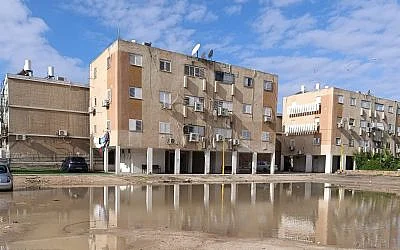
Urban renewal has the potential to improve housing, strengthen communities and create economic opportunities. Yet in many of Israel’s peripheral neighborhoods, these benefits remain out of reach.
In an article published in The Times of Israel, titled “Urban Renewal: An Updated Land Redemption Strategy”, Shani Radman explores how Jewish philanthropy can help close this gap and bring much-needed investment to underserved communities.
Why Urban Renewal Often Bypasses the Periphery
Across Israel, urban renewal projects are replacing aging residential buildings with modern housing and improved infrastructure. However, most projects are concentrated in areas where high property values make redevelopment financially attractive.
In peripheral cities, lower land values and financing challenges often prevent similar projects from advancing, even where residents face deteriorating buildings and inadequate protection against security threats.
The result is a significant disparity: neighborhoods that stand to benefit greatly from urban renewal are frequently those least likely to attract conventional private investment.
A New Role for Philanthropy
Radman’s article proposes a renewed approach to Jewish philanthropy. While earlier generations helped establish communities through land acquisition and development, today’s opportunity lies in revitalizing existing neighborhoods.
MANOF is putting this approach into practice through a nonprofit social urban renewal model that combines philanthropic capital, public resources, private investment and community development.
By helping overcome financial barriers, this model creates opportunities for projects that might otherwise remain economically unfeasible.
Investing in Communities, Not Just Buildings
Successful urban renewal should be measured by more than the number of new apartments. It should also improve residents’ safety, strengthen local communities and expand opportunities for social and economic mobility.
MANOF’s Kibbutz Galuyot project in Ofakim demonstrates this approach, combining plans for renewed housing and public spaces with ongoing social support for neighborhood residents.
MANOF’s approach connects physical redevelopment with long-term social programs, helping ensure that neighborhood renewal benefits existing residents.
As Radman emphasizes, the next chapter of Jewish philanthropy can focus on strengthening the communities already established in Israel and creating a more secure and resilient future.
Read Shani Radman’s full article in The Times of Israel to learn more about the role of philanthropy in advancing urban renewal.